
One Against Many
The Book of Five RingsThis thread follows the escalation from choosing a position to controlling an encirclement and breaking the opposing formation.
increasing Bearing strength in each event
 decreasing
Bearing strength in each eventdecreasingFacing All Directions
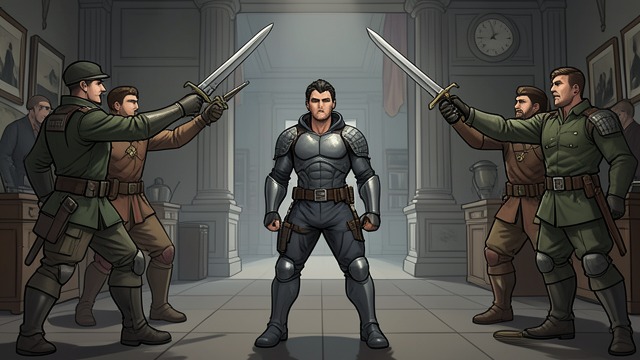
The Many-Enemy Problem
Wide Attention
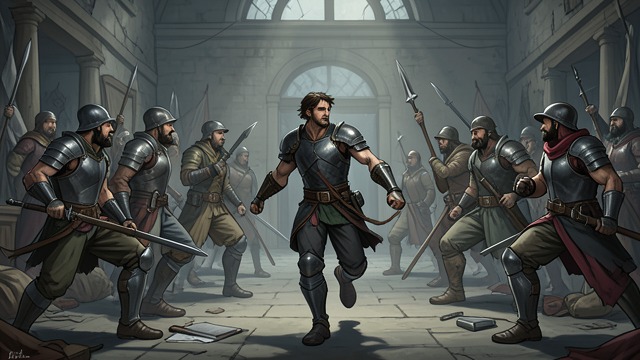
Musashi advises adopting a broad stance with both swords and observing which opponents attack first. The fighter must read the group rather than fixate on one threat.
Refusing to Wait
A passive defense allows the surrounding force to set the pace. The single fighter must move to meet attacks as they develop.
Choosing the First Attackers
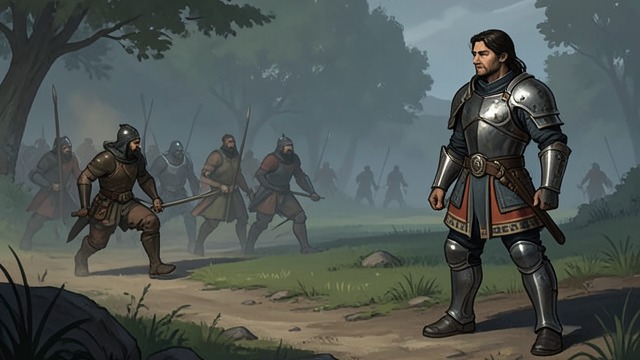
Reading the Order
Scanning the Field
The fighter watches the sequence of incoming attacks and moves toward those who advance first. Musashi treats attention as an active means of organizing the danger.
Preventing Enclosure
By responding to the order of attack, the fighter avoids being fixed in place. Movement becomes a way to keep the opponents from acting as one coordinated mass.
Driving the Group Together
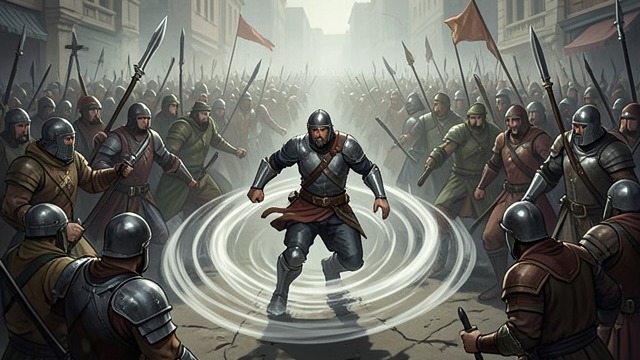
Shaping the Opponents
Controlling Their Direction
Musashi advises driving opponents together as though tying a line of fish. The goal is to limit their ability to exploit numbers separately.
Making Position Work
The fighter turns the opponents’ movement into a constraint on themselves. Strategic control replaces a futile attempt to answer every threat independently.
Breaking a Strong Point
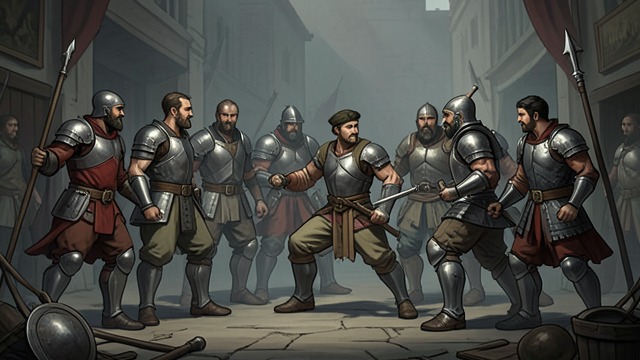
Injuring the Corners
Attacking the Edges
In large-scale strategy, Musashi recommends striking the corners of an enemy force rather than pushing directly against its strongest center. A weakened section can unsettle the whole formation.
Local Damage, Wider Effect
The method turns a limited success into a broader disruption. It depends on reading how the parts of a force support one another.
Crushing a Disordered Force
Turning Disorder into Defeat
Concentrated Pressure
When an opposing force is weak or disordered, Musashi says to crush it completely rather than strike lightly. Half-measures may let it recover.
The End of Resistance
The conclusion follows the logic of the entire thread: shape the engagement, disrupt coordination, and apply pressure before the enemy regains command of itself.
When a fighter is surrounded
As the opponents close from different directions
During the first exchanges against several enemies
When the larger force presents a vulnerable section
After the enemy formation loses resolve
